
Sunday Reflections
4th Sunday of Lent – March 15, 2026
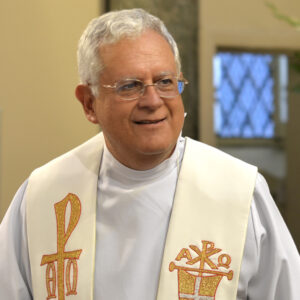
Reflection by:
Fr. Paul Voisin, CR
In 1972 there was a movie made called ‘Butterflies Are Free’. It is the story of a young blind man, Don, a talented songwriter and singer, who leaves the protection of his mother’s home and moves into an apartment in New York City. It happens that he begins to fall in love with his next door neighbour, Jill. Because of past hurts, Jill cannot accept or express her love for Don. Finally, Don realizes that although he is physically blind, he has accepted his blindness and has learned to live a productive and independent life. However, he tells Jill that she is more handicapped than he is because fear has blinded her from accepting herself as someone who is worthy of love.
I thought of this when I first read our gospel of this weekend. The gospel (John 9:1-41) for this Fourth Sunday of Lent has many profound aspects to it, but the ones that most caught my attention were blindness and light. We hear the dramatic encounter between Jesus and the young blind man, blind from birth. The references to sin – whether it was the sin of the young man, or of his parents – in regards to his blindness reflect the belief of the Jewish people that a physical ailment or handicap was the sign of sin, that physical and spiritual health were intimately connected. Jesus makes it very clear that this is not the case, but that this healing will reveal the glory of God in Him – God-made-man. He is healed of his blindness, and like the Samaritan woman in last week’s gospel, He proclaims that this man is a “prophet”. Once again, Jesus declares Himself as the Son of Man, the Messiah. The blind man cannot identify Him to the Pharisees, but He defends Jesus as a man of God. It seems the Pharisees are dumb-founded, and cannot manipulate the words of the man, his parents, or of Jesus to suit their own means. They want to discredit Jesus.
Then the conversation turns to the Pharisees and their blindness. Although they can physically see, Jesus tells them that they are spiritually blind. Jesus says that he has come “so that those who do not see might see, and those who do see might become blind”. Although they claim to be faithful to Moses, the Pharisees have strayed from the heart of the covenant and the life-giving relationship with God. They have begun to change the way of God to suit their own human weakness, and to bolster their position in the temple and in society. They do not, and cannot, recognize Jesus as the Son of Man because their minds and hearts are so far from God that they do not recognize him when he speaks and acts. Rather than glory in the power of God revealed in Jesus – giving the young man sight for the first time – they only want to be argumentative and defend their own sinfulness. They have lost sight of God.
The First Reading, from the First Book of Samuel (16:1b, 6-7, 10-13a), also speaks of a type of ‘blindness’. Samuel has been sent by God to the house of Jesse to anoint a new king. Naturally, he presumes it will be one of the mature, tall, strapping sons of Jesse. Each one comes before Samuel, but God does not choose any of them. He inquires if there are others, and of course Jesse calls for David, the youngest, and least experienced of his sons. This is the one that God has chosen, and Samuel anoints David as the future king of Israel. Once again, the people involved were ‘blind’, in a sense, to what God saw. They all saw a young and inexperienced man, but God read the mind, heart and spirit of David and knew that this was the one who would be His great king. God did not judge by appearances, but saw beyond them. Jesus did the same so often, when He chose Peter, James and John, the fishermen; Matthew the tax collector at the seaside; when He called down Zacchaeus down from the tree in Jericho; the Samaritan woman at Jacob’s Well; and when He met the scribes and Pharisees. The appearance was secondary to Jesus. He, as God-made-man, could see beyond appearance to the heart, mind and spirit of the person. So, too, it was with the blind young man. Whereas he was regarded as an outcast because of his blindness (because it was seen as a sign of his sinfulness), Jesus saw him as a worthy son of Abraham and an heir to the kingdom that He was inaugurating.
The other significant theme that I reflected on in the readings was that of light. In the gospel Jesus tells us that He is the “light of the world”. Just as He brought the light of sight into the life of the blind man, He wishes to dispel the darkness that exists in the world. In the Second Reading, from the Letter of Paul to the Ephesians (5:8-14), Paul tells us that we “were once darkness, but now you are light in the Lord”. Jesus has “given us light” and we are “children of the light”. In our Baptism we were enlightened by God and walk in the light of Christ. That darkness, and blindness to the love and truth of God, has no place in our lives. We belong to the light and are called to be light to others – at home, at school, at work, and among our friends. Jesus, our Saviour, has removed our spiritual blindness. Our eyes have been opened by Jesus to receive, recognize, accept, and live the love and truth that He reveals. Like the man born blind, we too proclaim Him as the Son of Man, and we want to follow Him.
We can only imagine what physical blindness is like – as in the case of Don in ‘Butterflies Are Free’ or the young man in the gospel. However, when we look into ourselves during this Lenten journey we may be able to recognize times of spiritual blindness, when we drifted away from God, been tempted and fallen into sin, and alienated ourselves from the significant people in our lives. That same Jesus who brought sight to the blind man comes to us today and opens our eyes through His word, His life-giving grace, and through the Eucharist so that we may truly ‘see’ as God sees – see God, ourselves, and one another. He brings us love, forgiveness and reconciliation. May this new freedom of sight, and the light of Christ, help us to proclaim Him to be our Lord and Saviour, and prepare us for the celebration of His death and resurrection at Easter.
Share This Post
More To Explore
3rd Sunday of Lent – March 8, 2026
As we mark the halfway point of the season of Lent, may our journeys through this spiritual desert bring us closer to God and renew us in spirit.
2nd Sunday of Lent – March 1, 2026
Our Lenten season is a time for us to focus on the ways that we might put sin behind us so that at Easter we might celebrate with joy the new life that God longs to impart to us.