
Sunday Reflections
6th Sunday in Ordinary Time – February 15, 2026
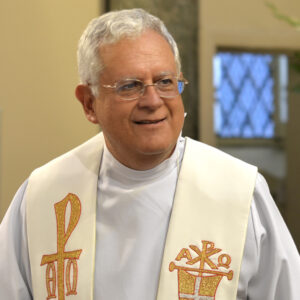
Reflection by:
Fr. Paul Voisin, CR
Sometimes in our human condition we can be tempted to have a minimalistic attitude. We might see this in the student who thinks, “How little work do I need to do in order to pass the course?, or the worker who thinks “How little work can I do today, without getting found out?”. I remember as a child when the priest would visit the classroom, someone was bound to ask, “Father, how late can I come for Mass, and still consider that I have been to Mass?” This attitude, unfortunately, is very destructive, because it lowers our expectations of ourselves and others, but for the best results but with the least amount of effort. There is no room for sacrifice, or self-control, or integrity in this attitude.
I thought of this attitude when I read the gospel of this weekend (Matthew 5:17-37). The three examples that Jesus gives goes in the opposite direction of the human trait that I just described. He uses examples of the Commandments: Thou shalt not kill, Thou shalt not commit adultery, and Thou shalt not bear false witness. He challenges his listener to go beyond doing the minimum, to recognize what a full response to the Commandment communicates. This is kind of scary, since he gives the same challenge to us, and He speaks so dramatically about those who break the Commandments. In His wisdom He shows us how broad and inclusive the Commandment really is. This expands our responsibility to act in accord with the letter and spirit of the Commandment, and not interpret it to suit our need or situation. The consequences of breaking the Commandment are indeed worrisome in their severity – prison and hell (Gehenna).
In the First Reading from the Book of Sirach (15:15-20) God reveals the importance of keeping the Commandments. He makes it very clear that it is our choice how we respond – life and death, good and evil – but once again, God speaks strongly about the consequences of the wrong choice. He consoles us in this challenge with the fact that God gives us wisdom to choose well, if we truly open ourselves to His grace. The Commandments help us to avoid sin.
Our Second Reading from the First Letter of St. Paul to the Corinthians (2:6-10) St. Paul echoes the First Reading’s message about the wisdom of God which is ours. He calls it “mysterious and hidden“, which leads us to believe that it is in God’s hands, not ours. He will give it as He sees fit. Once again, our personal response to Jesus makes all the difference, being open to Him, whether we share in the wisdom of God. What awaits us, in this case, may surprise us, as the words of Paul (from Isaiah 64:3), “What eye has not seen, and ear has not heard, and what has not entered the human heart, what God has prepared for those who love him“. St. Paul tells us that God has revealed this to us “through the Spirit”.
As I reflected on the (long) gospel, one particular line struck me, “If you bring your gift to the altar, and there recall that your brother has anything against you, leave your gift there at the altar, go first and be reconciled with your brother, and then come and offer your gift.” This made me think about the sensitivity required to know what God is asking of us. It is easy to identify when someone has offended us, when we feel the ‘injured party’, but (in our human condition) it is not as easy to identify when we have offended someone, when the other is the ‘injured party’. In relation to the Commandments, I believe that this comes from looking at ourselves, one another, life and the world with the eyes of God. When we understand the will of God, and the intention which with God created us, our eyes are opened to new ways of thinking, feeling, speaking and acting. Then, there is no room for minimalism, or trying to take the easy way out. That is surely not the way of the Lord Jesus, as reflected in His life, suffering, death and resurrection! Jesus assures us that this sensitivity is possible, because He allows us to share in His wisdom. If we open ourselves up to His truth and love, his wisdom will be ours. Then we will see with the eyes of Jesus, hear with the ears of Jesus, think with the mind of Jesus and feel with the heart of Jesus. Then, how can we go wrong? This union with Christ will help us to fulfill the “law and the prophets” because we will be sharing deeply and intimately in the life of God. Then we will know when “our brother has something against us” before he tells us, or before the silent treatment, or before the confrontation. God’s wisdom will awaken us to the consequences of our words and actions, and give us the grace to remedy our errors, mis-steps and sins. Our grace-filled response will not be minimalistic, but will embrace the fullness of the message of Jesus Christ. His grace will encourage us to respond with all our heart, as we fulfill his Commandments.
The founder of the Congregation of the Resurrection, Bogdan Janski, wanted to make a difference in the world. He did not want the minimum or the status quo to prevail. He decided that the way to change the world would be through economics. And so he studied economics at the University of Warsaw. He excelled there, and was given a scholarship to the University of Paris, and even went to England to study under John Stuart Mill. However, after a while Bogdan realized that economics was not the way to change the world. In Paris he came into contact with a social reform group, the Saint Simionists, but after a while he realized that they did not have the answer either. In Paris he came into contact with a group of Catholic intellectuals who helped him to recapture his Catholic faith, which he had abandoned, and to discover that Jesus had the answer, that the world would be transformed through faithfully following Jesus. And so he began a process of conversion, and gathered around himself other like-minded people, in particular our co-Founders, Peter Semenenko and Jerome Kajsiewicz, and together they formed the Congregation of the Resurrection, to work together for the resurrection of society.
This week, animated by these readings, let us trust in the wisdom of God, and the presence of the Holy Spirit, to take us beyond a minimalistic attitude, to a full awareness of the life of God within us, and how to live and show that life to the world.
Share This Post
More To Explore

25th Sunday in Ordinary Time – September 20, 2026
Today’s readings call us to reflect on how we accept the ‘ways’ and ‘thoughts’ of the Lord, especially in relation to accepting His unconditional and generous love.

24th Sunday in Ordinary Time – September 13, 2026
Perhaps this coming week, we all can thank God for the mercy we have received and then, examine our relationships with those around us.