
Sunday Reflections
25th Sunday in Ordinary Time – September 20, 2026
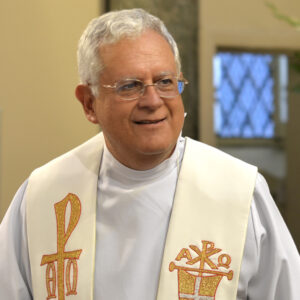
Reflection by:
Fr. Paul Voisin, CR
It seems only natural, in our human condition, that we make comparisons. We may make comparisons about things in the world, such as the wealth or productivity of nations. However, more often, I believe, we make comparisons that touch our lives more intimately – who is prettier or more handsome, who is more successful, who is smarter, etc. Many times these comparisons lead to someone thinking “It isn’t fair!” Sometimes these comparisons can move us forward, encouraging us, but more often, I believe, it has just the opposite effect, to discourage us and make us feel bad about ourselves.
Definitely the reaction of most people to today’s gospel (Matthew 20:1-16) is that “It isn’t fair!” How could the landowner pay the workers who had only worked an hour the same as those who had slaved all day in the heat? “It isn’t fair!” The only other gospel that I have seen similar vehemence is of the Prodigal Son, when again the initial reaction of many is “It isn’t fair!” Why would the father celebrate the return of the ungrateful son who came back asking forgiveness, when the ‘good’ son was faithful all the time? According to our human logic, “It isn’t fair!”
One of the scriptural explanations that I was given was the urgency of the landowner. September was the harvest time in Israel, but it was also the beginning of the rainy season. And so when the crops were ready – whatever they were – there was an urgency to get them out of the field or off the vine, so that the ensuing rains would not destroy the crop. Perhaps dark clouds were looming this day of the gospel parable and the landowner was so desperate to get the grapes picked that he continually went out seeking more workers.
And so what is the gospel about? It isn’t about comparisons, and it for sure isn’t about labour laws and fair wages. The gospel is about the generosity of God. God’s generosity defies our human appreciation, and our logic to what is fair and just, and what is right. In the gospel the landowner said, “Am I not free to do as I wish with my own money? Are you envious because I am generous?” It is definite that God’s ways and our ways are not the same!
n the First Reading (Isaiah 55:6-9) God reveals through Isaiah that. “My thoughts are not your thoughts, and your ways are not my ways. As high as the heavens are above the earth, so high are my ways above your ways and my thoughts above your thoughts.” God, in His wisdom, sees us, and the events and occurrences of our lives in different ways than we do. In our human condition we often question God’s judgment and God’s will. We expect God to act according to our human logic and to our human standards. When this does not happen, we protest, only if we see ourselves as disadvantaged by what happens. The workers who came into the vineyard at the last hour were not complaining, but those who came in the first hour sure were. They did not see the landowner as generous and benevolent, but foolish and unjust. This can only be resolved in our own lives when we can reflect on something that may have happened and see that indeed, God’s way was better, God’s thoughts were superior. Until then we will protest and argue and continue to debate the folly of God’s ways and thoughts.
Perhaps our greatest challenge before these readings is to accept that God is that generous and loves us that much, so much that He sent his Son, and that the Son loved us that much that He died for us on the cross. Many people struggle with feelings of unworthiness, in particular around the unconditional love of people in their lives. Most of us believe, and our experience tells us, that we must ‘earn’ love. Yet God’s way and thought is that we have that love for free. It is a gift. It is a grace. Nothing we can say or do can rob us of that love of God, even denying him and turning our back on him. He still loves us. I remember when some friends of mine had their first child, and the new father called me and asked me to come to the hospital. It was 9:30 at night, and so I put on my collar and went to the hospital, confusing the nurses in Maternity. But, they let me in, and I saw their new son. The new mother said to me, “I never realized how much I was loved until I held my own child in my arms”. This is only a little reflection of the unconditional love of God for us, and this generosity and benevolence with us, in every situation.
Often this gospel is interpreted that those who were the last to work in the vineyard represent the sinners who later in their lives turned to God and were faithful to him, while others were faithful through and through from the very beginning. God is fair that these ‘late comers’ see heaven. Jesus died for the sins of those who worked from dawn, as well as those who only worked one hour. We cannot limit the love of God, or his mercy. THANK GOD that his ways are not our ways, and his thoughts are not our thoughts.
Today’s gospel calls us to reflect on how we accept the ‘ways’ and ‘thoughts’ of the Lord, especially in relation to accepting His unconditional and generous love. It is there for us if we accept it or not, but if we do accept it in our heart then His abundant grace can do far more in us as we respond in love to God, and share that generous love with one another. God is, and always will be, “fair”.
Share This Post
More To Explore

24th Sunday in Ordinary Time – September 13, 2026
Perhaps this coming week, we all can thank God for the mercy we have received and then, examine our relationships with those around us.

23rd Sunday in Ordinary Time – September 6, 2026
The readings this Sunday challenge us to be people of hope, to not despair that those around us are capable and willing to change.